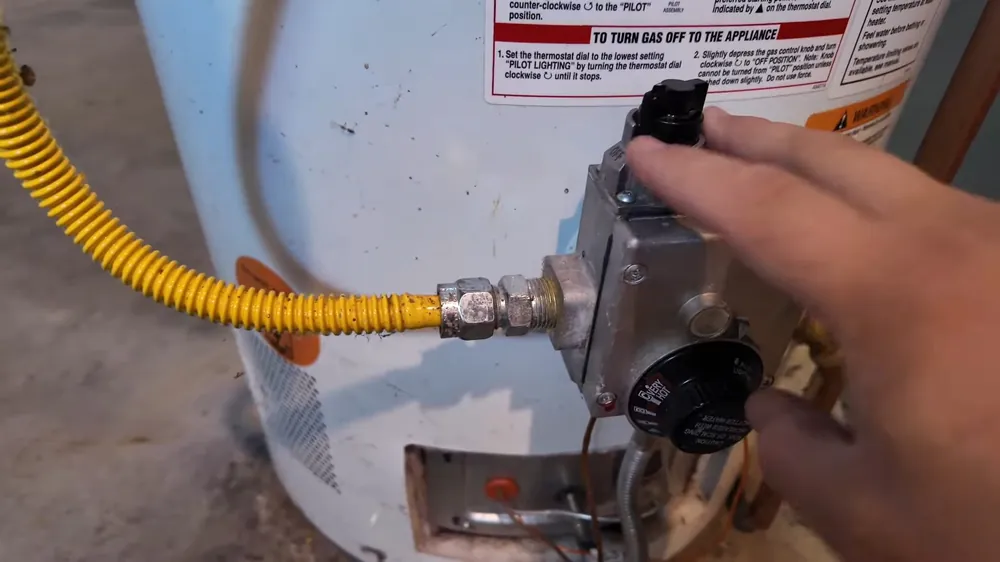
Water heater repair in Raleigh when the shower runs cold, the tank leaks or it starts to rumble
Water heater repair is the work of diagnosing why a tank stopped making hot water, leaks, or makes noise, and deciding whether a part, a flush or a new unit is the sensible fix. It is for anyone standing in a cold shower or looking at a puddle around the tank.
- Licensed and insured plumbers
- Same-day service when available
- 24/7 emergency dispatch
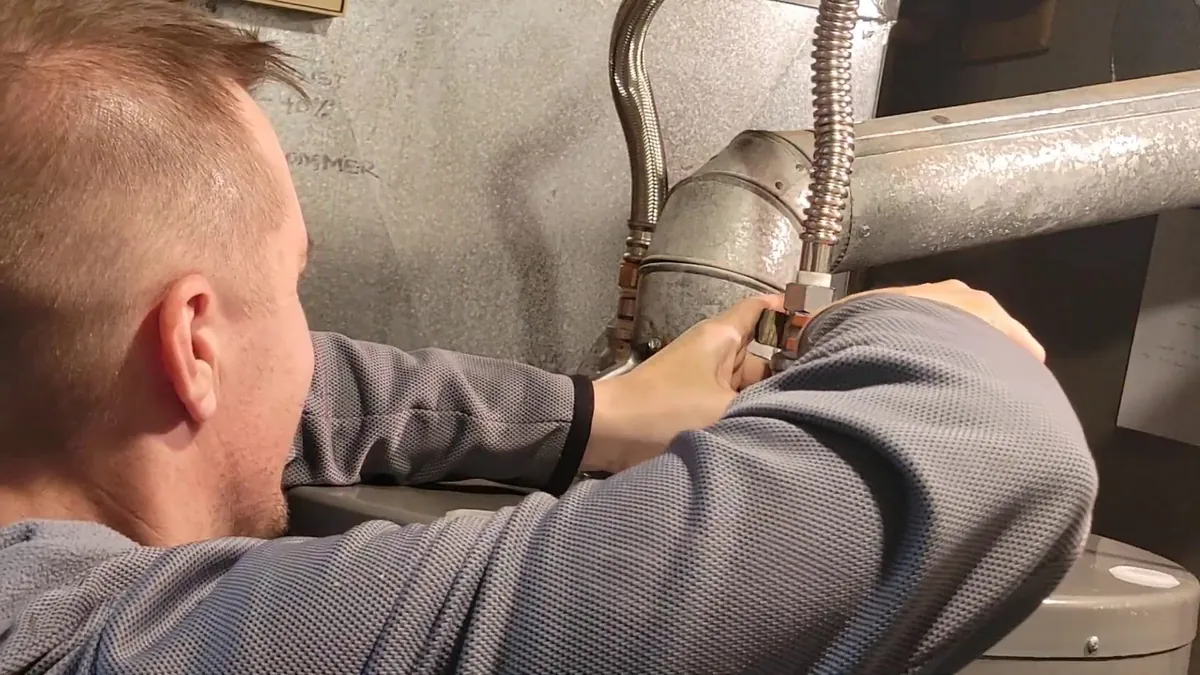
Gas vs electric: which water heater do you have, and why it matters
The fuel decides the likely faults. A gas heater has a burner, a pilot or igniter, a thermocouple or flame sensor and a flue. An electric heater has heating elements, thermostats and a high-limit reset. Look at the label on the tank or follow the supply: a gas line with a shutoff valve and a flue pipe on top mean gas; a heavy cable into a junction box means electric.
| Symptom | Gas tank | Electric tank |
|---|---|---|
| No hot water at all | Pilot out, igniter fault, or no gas supply | Tripped breaker, tripped reset button, or failed element |
| Lukewarm water | Dirty burner or a weak flame sensor | One of two elements has failed |
| Water runs out fast | Sediment over the burner or wrong setting | Lower element or thermostat fault |
| Rumbling or popping | Sediment baked on the tank floor | Sediment around the lower element |
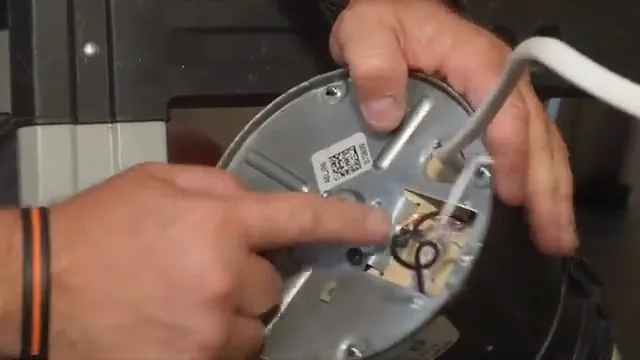
No hot water: checks you can do safely
A few checks need no tools and no risk. Start with the breaker if the heater is electric, because a tripped breaker is a common and simple cause. For a gas heater, check that the gas valve at the tank is open and that the pilot window shows a flame; do not relight the pilot if you smell gas.
- Check other hot taps: if only one is cold, the issue is the fixture, not the tank
- Look under the tank for water, rust streaks or a wet floor
- Find the temperature dial or setting and see if it was bumped
- Listen for popping or rumbling, which points to sediment
- Note the age on the label, which affects the repair decision
Stop there. Opening panels, resetting high-limit switches or touching wiring is the plumber's job, since electricity and gas are involved and a wrong guess can leave a pilot burning with a bad vent. Write down what you saw, because it shortens the diagnosis.
Cold shower? Call now.
Find out whether the heater is worth repairing before you pay for parts.
Call (984) 237-6514Leaking tank or leaking fitting: the difference decides the fix
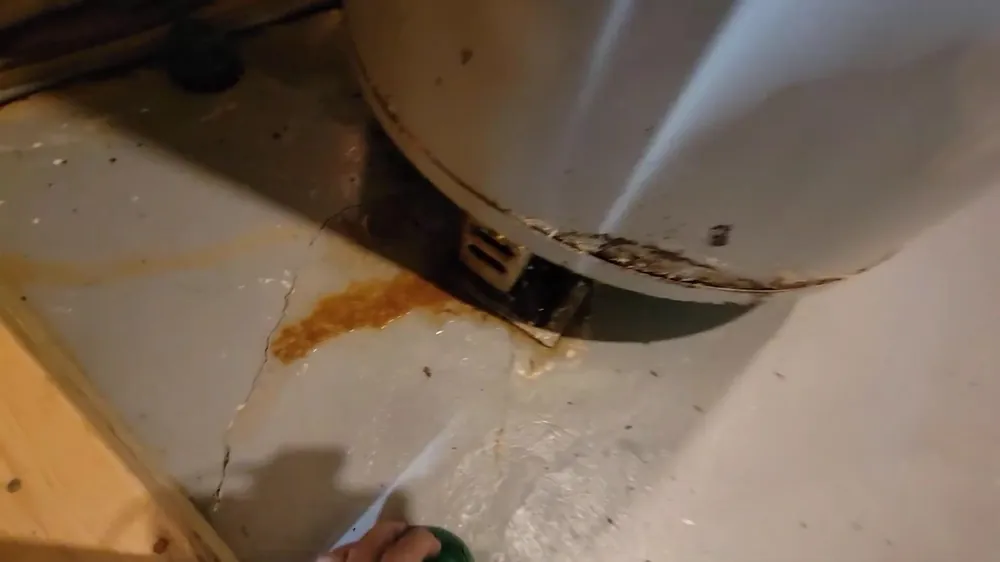
A leak from the connections at the top, from a supply line or from the pressure relief valve can often be repaired with a new fitting or valve. A leak from the tank body is different. Once the steel shell corrodes through, the tank cannot be patched, and replacement is the answer.
Check where the water appears. A puddle at the base with a rusty tank bottom points at the tank. Water dripping from the discharge pipe on the relief valve may signal high pressure or a worn valve. Do not plug that valve or its discharge pipe, because it is a safety device. If water is spreading, close the cold-water inlet on top of the tank, turn off power or gas at the heater, and call. Wet floors from a failed tank may need drying afterward, which the water damage restoration page covers.
Repair or replace: how to decide
The decision rests on three things: the age of the tank, the cost of the repair and the type of fault. A new thermostat or element on a heater in decent shape is a sensible repair. A leaking tank, or a heater near the end of its life that needs a second repair, usually points to replacement.
Ask your plumber to put both options in writing, with what each includes and what happens to the old unit. On permits, Wake County requires plumbing permits for replacement and general repair in the areas it serves, but lists an exemption for water heater replacement in one and two family dwellings under conditions. Raleigh's own rule was not confirmed, so ask the plumber to verify with the permit office that serves your property. If replacement wins, the replacing a water heater page walks through sizing, fuel and installation choices.
Leaking tank or gas smell?
If gas is in the air, get out and ring 911 or the gas utility. For a leak, the number is (984) 237-6514.
Call (984) 237-6514Flushing and sediment in soft Raleigh water
Sediment collects on the bottom of every tank over time, and it makes rumbling, popping and slow recovery. Routine maintenance helps: a flush drains water from the tank to carry sediment out, and the plumber can also check the anode rod, which protects the steel from corrosion.
Raleigh water is soft. The City reports an average of 1.47 grains per gallon and says its water should not require a softener, so heavy mineral scale is less likely here than in hard-water areas. The practical action: ask for a flush and an anode rod check at the next visit instead of assuming a softener is the cure for noise. If the plumber pulls the anode rod, ask what it looks like; a mostly eaten rod is an early warning that the tank is near the end of its life.
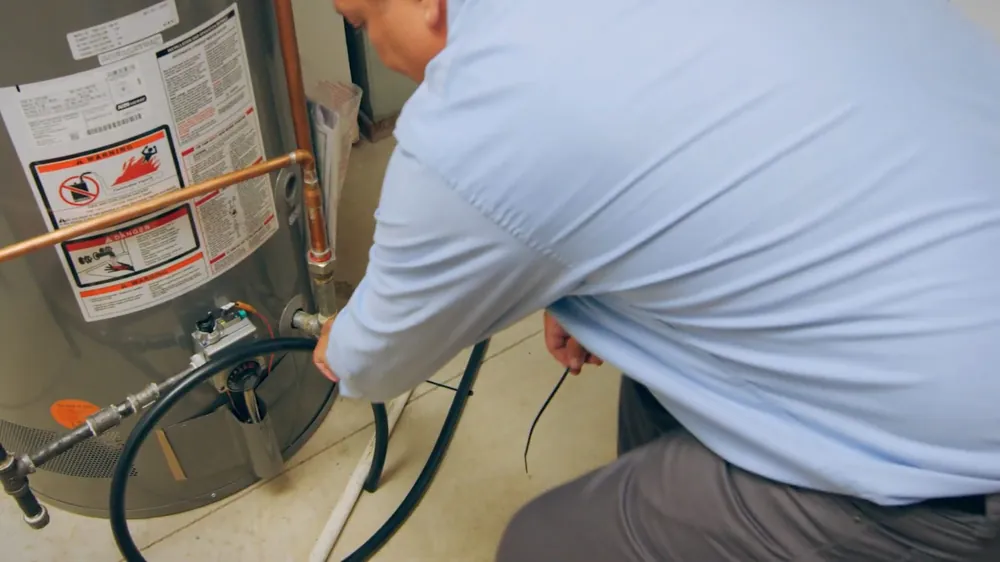
Who fixes hot water heaters, and how fast
A licensed plumber handles the water side and, for gas units, often the gas connection and venting too. The gas utility owns the line up to the meter, so a gas smell goes to the utility or 911 and not to a repair call. An electric heater problem on the wiring side may call for an electrician, and a plumber will say so if the breaker or the circuit is the cause.
Urgent calls are those with active leaks, any gas smell, or no hot water in a house with infants or someone who is ill. The rest can be scheduled. A repair visit usually starts with a diagnosis of the unit and a quote before parts are ordered, so ask when the part is available and whether the plumber carries common ones.
Water heater questions
Answers to sizing, who to call and whether a heater is worth repairing.
What size water heater do I need?
Size depends on how many people use hot water and how much at the same time. A larger household with several showers and a dishwasher in the morning needs more tank capacity, or faster recovery, than a couple.
If you are replacing an old tank, the label gives the current capacity and a plumber can tell you whether it was right for the house. For a detailed sizing conversation, see the installation page.
Do I need a plumber for water heater repair?
Yes, for anything beyond resetting a tripped breaker or checking the temperature setting. Gas supply, venting, relief valves and wiring are risky for a homeowner to work on.
A plumber can also tell you whether a repair is worth doing on an older tank.
Who fixes hot water heaters?
A plumber handles most tank heater repairs, including gas connections and relief valves. An electrician steps in if the fault is in the circuit or breaker. For a gas leak or smell, call 911 or the gas utility first.
Ask who is coming and what they service before you book.
Can a water heater be repaired?
Often it can, if the fault is a part such as a thermostat, element, igniter or valve. A rusted-through tank cannot be repaired.
Age matters. A newer unit with a single fault is a good repair candidate, while a unit near the end of its life with a new fault may not be.
How often should I flush my water heater, and who handles it?
The manual states the maker's schedule, and many suggest yearly. In Raleigh, where the water is soft, sediment still collects over time, so a flush remains useful.
A plumber can flush the tank and check the anode rod in one visit, and tell you whether sediment is causing the noise.
Get hot water back
The phone is answered around the clock, which means a cold morning is no reason to wait.
Call (984) 237-6514- Licensed and insured plumbers
- Same-day service when available
- 24/7 emergency dispatch