Emergency slab leak? Warm floors and hissing pipes point to water under the concrete
A slab leak is a break in a water line that runs in or under a concrete foundation slab, and it matters to any homeowner who notices a hot patch on the floor, a meter that will not sit still, or the sound of water with every tap closed.
- Licensed and insured plumbers
- Same-day service when available
- 24/7 emergency dispatch
Slab leak detection and location: signs first, then a pinpoint
What you can observe from inside the house is the starting point, because the order in which symptoms appeared often helps the plumber guess which line is leaking. These signs, alone or together, are the reason to call.
- A floor spot that stays warm or hot when no hot tap is running
- A water bill that climbs with no change in habits
- The sound of running or hissing water through the floor at night
- Damp carpet edges, baseboards that swell, or tile that lifts
- Low water pressure at every fixture, not just one
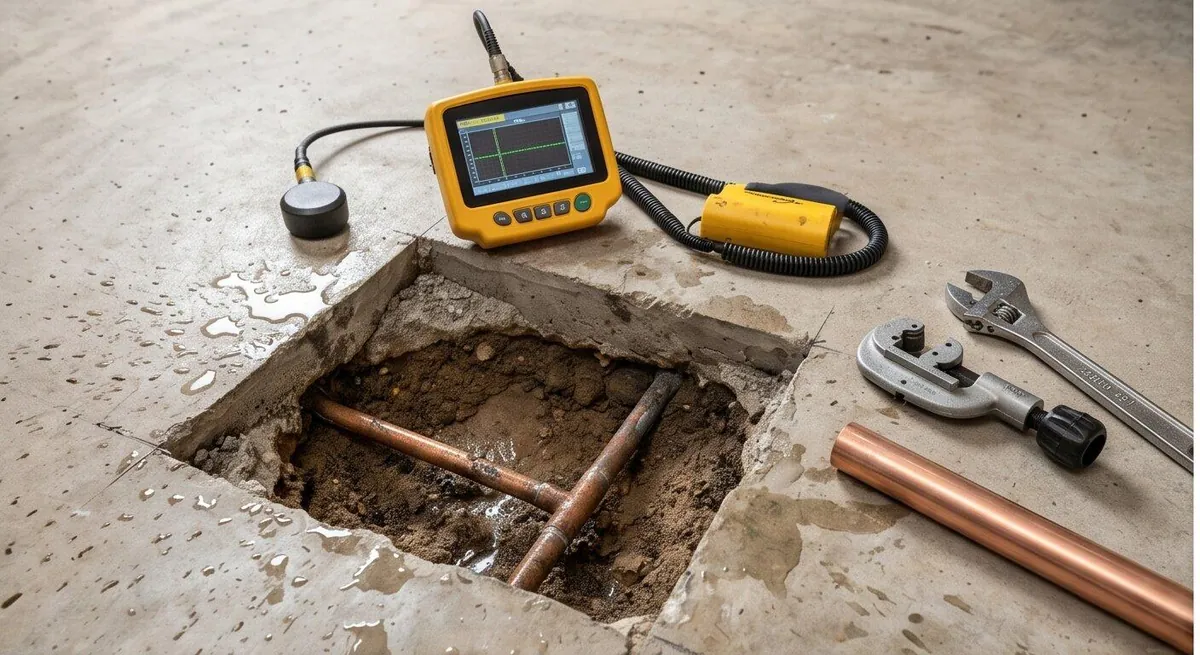
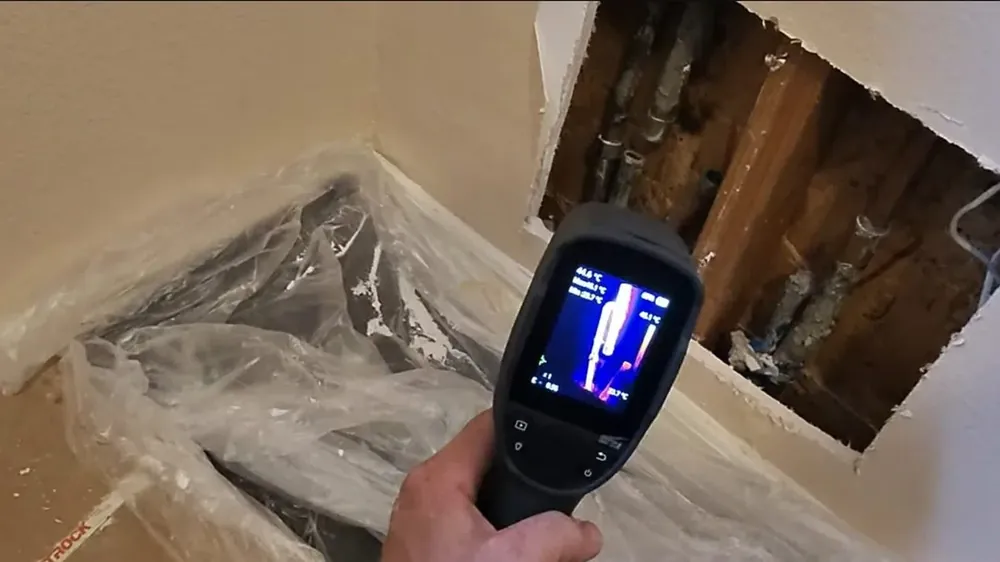
None of these proves a slab leak, and that is the point of locating before repairing. A plumber confirms the leak with a meter test, then narrows it down with acoustic listening and a thermal camera, and can run a pressure test on each line to learn which one is losing water. The goal is a marked spot on the floor, so any opening in the concrete is small and targeted.
Slab leak repair: three ways to deal with the pipe
With the leak located, the choice is between fixing the spot, bypassing the damaged run, or lining it. Each has a place, and your plumber should say which one fits your house and why.
| Method | What it involves | Fits best when | Ask the plumber |
|---|---|---|---|
| Spot repair through the slab | Break a small opening, cut out the failed section, replace it, then patch the concrete | One clean failure on an otherwise sound line | How big is the opening and how is the floor finished afterward? |
| Reroute around the slab | Cap the buried line and run new pipe through walls or the attic | The same line has failed more than once, or access is awkward | Where will the new pipe run and who repairs the drywall? |
| Epoxy or lining | Coat the inside of the pipe to seal pinholes without digging | Pipe is otherwise intact and the leak is minor | Is the pipe a good candidate and what warranty applies? |
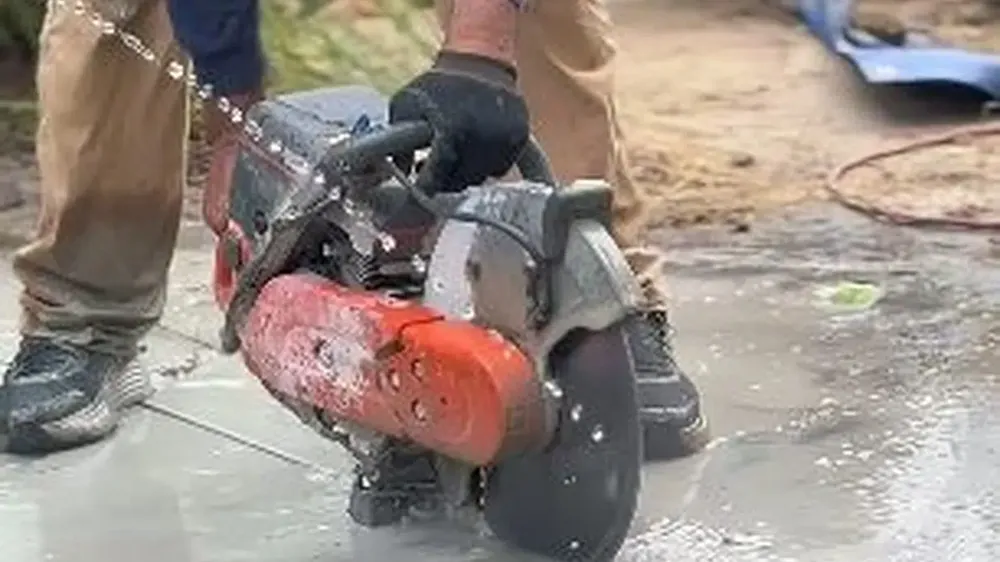
Trenchless slab leak repair, meaning a tunnel dug from outside to reach the pipe under the slab, is another option when the leak sits near the edge, but it is less common than opening the floor or rerouting. A good estimate names the method, the approach to the floor finish, and the permit question. Cutting the slab and replacing pipe are the kind of jobs where permit rules can apply; Wake County, for instance, requires plumbing permits for general repair and replacement in the areas it serves, and the permit office that covers your property decides inside the city.
Warm floor or running water sound? Call now.
A plumber can confirm the leak and show you how to protect the floor.
Call (984) 237-6514Foundation and concrete: confirm what your house sits on
The foundation under your house decides the repair, so confirm what you have first: slab, crawlspace, basement, or a mix of them. If the pipe is in a crawlspace, the repair is usually simpler and the page on leak detection and repair may fit better.
When there is a slab, the foundation matters in a second way. A foundation leak inspection is worth asking for: water that escapes under concrete can wash soil away or lift flooring from below, and a slab with cracks or settled sections near the pipe deserves a look before and after repair. Photograph the area and ask the plumber to note any cracks they see, so you have a record if a structural question comes up later.
Insurance, documentation and what to keep
Slab leak claims depend on your own policy, which may treat the pipe repair and the resulting water damage differently. Read your policy or call your insurer before work starts, and ask the plumber for a written report that names the cause, the location and the repair method. Photos of the damage, the meter reading and the invoice are the records most insurers and the City ask for if a bill adjustment is requested.
If water has already soaked floors or walls, drying and cleanup are a separate job, covered under water extraction and drying. Keep wet materials documented and avoid tossing anything until you have photographed it.
One more habit helps: keep the old pipe section if the plumber removes one. A corroded or cracked piece shows the cause better than a description, and it gives an insurer or a second plumber something to look at.
Do not wait on a leak under concrete
Ring (984) 237-6514 whatever the hour, and close the main valve first if water is spreading.
Call (984) 237-6514Call now or wait: when a slab leak cannot sit
Some situations are urgent. A hot-water line leaking under a slab can warm the floor and soak flooring quickly; a pressurized cold line can run for days and push your bill up. If you can hear water or see it spreading, close the main valve and call.
If the signs are subtle, such as a slightly warm spot or a slow rise in the bill, you can wait for a scheduled visit, but check the meter first. If the meter keeps turning while every fixture sits idle, the leak is active and delay only adds damage. Dispatch for emergency work runs 24/7, and the plumber who arrives will confirm the problem before suggesting a plan. The related page on leak finding covers the wider process of finding leaks that are not under concrete.
If the line keeps failing
Repeated slab leaks on the same line usually mean the pipe itself is wearing out. At that point, repeated openings in the floor cost more than a planned reroute, and repiping and pipe repair becomes a reasonable conversation. Ask your plumber for a written comparison of another spot repair, a partial reroute and a full replacement, with what each means for floors and walls. Keep a short log of each leak with the date, the location, the repair method and who did it, because a pattern on one line makes the case for rerouting and the log helps with any warranty question. Ask how long the work takes, how water will be shut off to the house in the meantime, and how floors, baseboards and paint are returned to a finished state. For the full list of plumbing help dispatch handles, the main Raleigh page lists every service.
Slab leak questions
Answers to the questions people ask when the floor is warm or the meter will not stop.
How do I know if I have a slab leak?
Look for a warm spot on the floor, a bill that rose with no change in use, or the sound of water when everything is off. Then read the water meter with all fixtures closed; if it moves, a leak exists somewhere past the meter.
That test does not prove the leak is under the slab, only that water is escaping. A plumber confirms location with listening equipment or a thermal camera before anyone opens the floor.
Do I need a plumber for a slab leak, or can I fix it myself?
You need a plumber. The pipe is buried, the leak must be located precisely, and cutting concrete without that location can damage other lines or the slab itself.
What you can do is safe: close the main valve, keep the room dry, photograph the signs and read the meter. The local rule is also worth knowing, because plumbing permits can apply to repair and replacement work, and the plumber can verify the need with the local permit office.
What should I do first if I think the slab is leaking?
Close the main water valve, then read the meter with everything off and write down the number and the time. Keep the area dry and away from outlets, photograph any wet floor, warm spot or damp wall, and call dispatch at (984) 237-6514.
One caution: do not break the floor to look for the pipe yourself. You can hit a live line or cause more damage than the leak.
Get the slab leak located and repaired
Calls are taken through nights, weekends and holidays.
Call (984) 237-6514- Licensed and insured plumbers
- Same-day service when available
- 24/7 emergency dispatch